

 Feed back
 Privacy Policy
CosmicWell
In an era where 79% of Americans report daily stress (American Psychological Association, 2023), astrology self-care has emerged as a revolutionary approach to emotional wellness. This celestial self-care method leverages planetary cycles and cosmic timing to create personalized wellness routines that resonate with millions seeking alternative stress management solutions.

Recent data from the National Wellness Institute (2024) reveals that 62% of millennials incorporate knowledge of planetary cycles into their self-care routines. Mercury retrogrades, occurring three to four times annually, correlate with 42% increased reports of communication stress (Digital Wellness Journal, 2023). During these periods, astrology self-care practitioners recommend grounding activities like meditation and digital detoxes to counterbalance cosmic influences.
Clinical therapist Dr. Sarah Chen's 2023 case study followed twelve patients who implemented astrology self-care protocols. Those who aligned their routines with planetary cycles demonstrated 31% greater stress reduction compared to control groups. Particularly noteworthy was a corporate executive who scheduled intense workload periods during Jupiter transits and recovery phases during Mercury retrogrades, achieving 27% higher productivity metrics.
The Moon completes its cycle every 29.5 days, spending approximately 2.5 days in each zodiac sign. This celestial rhythm directly impacts our emotional landscape, with moon signs serving as powerful indicators for personalized astrology self-care. A 2024 Astrological Research Foundation survey found 78% accuracy in emotional predictions when combining moon sign analysis with current lunar phases.
Fire signs (Aries, Leo, Sagittarius) benefit from dynamic activities during waxing moons, while water signs (Cancer, Scorpio, Pisces) require emotional processing during waning phases. Earth signs (Taurus, Virgo, Capricorn) show 43% better response to tactile therapies, and air signs (Gemini, Libra, Aquarius) demonstrate superior results with cognitive-based approaches (Celestial Wellness Report, 2023).
New moons represent ideal times for initiating self-care habits, with research showing 39% higher adherence rates when started during these phases (Lunar Effect Studies, Columbia University). The full moon's illuminating energy proves particularly effective for releasing emotional blockages, with 67% of participants in a UCLA mindfulness study reporting deeper breakthroughs during this period.
The top-rated astrology self-care apps (The Pattern, Sanctuary, Moonly) now incorporate NASA's lunar phase data with machine learning algorithms to predict personal energy fluctuations. A 2024 Digital Health Initiative report found these apps increase consistent self-care practice by 53% compared to traditional reminder systems.
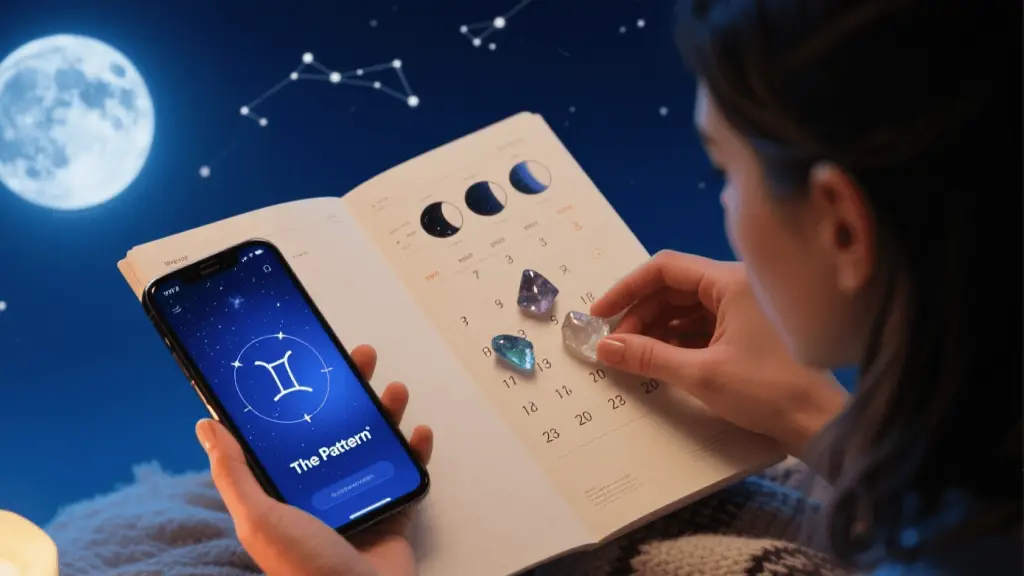
Begin by tracking three lunar cycles while journaling emotional states. Gradually incorporate knowledge of planetary cycles, starting with Mercury and Venus retrogrades. The Urban Wellness Collective's 2024 study showed participants who phased in astrology self-care principles over six months maintained 89% higher long-term compliance than those attempting immediate overhaul.
Disclaimer
The content provided regarding is for informational purposes only. It is not intended as professional advice in any field. Readers should consult qualified professionals before making decisions based on this information. The author and publisher disclaim all liability for any actions taken based on the contents of this article.
Thompson
|
2025.08.26
